
Checking Criminal History in Hudson
Begin with the question the record must answer. Hudson Police can supply public parts of its own report. MiCOURT and the clerk show what the prosecutor filed and what the judge decided. The Sheriff can confirm a county booking or present custody status. ICHAT can provide a name-based Michigan history for public reportable events, but it leaves out several important categories.
Use a five-part search when the full record trail is not known:
- Contact the Hudson Police Department for a Hudson incident, arrest narrative, or related agency record.
- Give a precise description with the date, location, incident number, record type, and preferred delivery method.
- Search MiCOURT in Lenawee's 2A District Court and, for a bound-over felony, 39th Circuit Court.
- Call the official Lenawee jail information line or use Sheriff Records for a booking or custody record.
- Check ICHAT for public reportable statewide history while accounting for its exclusions and possible reporting delay.
A name match is only a lead. Confirm the case number, court, dates, and charge-level disposition with the originating office.
Hudson Records Without City Portal
Research did not identify a public Hudson police-record search portal. That limits the online route, not the right to ask for an existing public record. The city's official police page is the request starting point. Phone or counter contact can confirm the current city method, while a focused written Michigan FOIA request creates a clear description and delivery address for the response.
Describe the record, not a broad subject. A request for the incident report from a known date and place gives staff something concrete to locate. If video, dispatch audio, photographs, or supplements are also needed, name each item. Asking for all information about a person may be too vague and can sweep in material that is not an existing public record.
A small city may publish fewer forms than a larger office. The fallback chain remains valid: Hudson Police for its report, county courts for the prosecution, Sheriff Records for booking, and Michigan systems for the appropriate statewide layer.
Hudson Police Department Records
Hudson Police creates the local event file when its officers respond or make an arrest. Public portions may identify the agency incident number, date and place, alleged offense, involved officers, and releasable narrative. Supplemental reports, evidence descriptions, dispatch data, and video may be separate records. The initial police label does not control the later prosecutor charge.
The City of Hudson website is the source for the city government view associated with this record route.
The city source reinforces the key local distinction: Hudson holds its police material, while the trial court and county jail records remain with Lenawee County offices.
Hudson Police cannot certify a District or Circuit Court judgment, and Sheriff Records cannot supply a city officer narrative it did not create. Send each request to its actual custodian. That simple step avoids delay and makes any fee estimate more useful.
Hudson Police Narrative Requests
The narrative is often the part of a Hudson police report that explains what officers were told, what they observed, and why enforcement action followed. It is still an allegation and agency account. A court pleading may use different language, and the final disposition may differ from both the incident report and booking charge.
Include enough detail to distinguish the event: approximate time, specific location, incident number, and report type. State whether an electronic copy, paper copy, or inspection is preferred if the city offers choices. Requesters should ask for current cost information before ordering broad video or audio collections because review and redaction can add labor.
Michigan law can protect juvenile content, victim identifiers, medical facts, confidential sources, and information that would interfere with an active investigation. A partial denial should identify the legal basis. It should not turn a separable public report into an automatic full withholding.
Hudson Arrests and Bookings
Hudson Police records the local arrest, but county jail intake belongs to the Lenawee County Sheriff. A booking can add an intake time, booking identifier, listed charge, bond or hold information, and release or transfer data. That custody file is not a duplicate of the Hudson police report. It has a different purpose and custodian.
There is no public Lenawee web roster. The automated inmate-information line is 517-265-4400. Callers choose a specific-inmate lookup, then search by name or date of birth through the telephone keypad. Available results can include charges, bond amounts, upcoming court appearances, and other custody information. Use the Sheriff Records Division for an older booking copy or an existing sheriff record that is not available by phone.
No official daily Hudson arrest blotter was located. A missing press item or city web result cannot show that no arrest occurred. Court and jail channels are the stronger checks for recent case and custody status.
Hudson Police and Booking Records
One Hudson arrest can produce records that look similar but answer different questions. The agency report describes the police event. The jail file documents intake. The court file shows the filed case. A state history can link reportable events after agencies send identifying and disposition data.
| Source | Main Question | Typical Content |
|---|---|---|
| Hudson Police | What did officers report? | Incident number, date, location, narrative, alleged offense, public supplements |
| Lenawee Sheriff | Did county jail intake occur? | Booking data, custody status, bond, hold, and release details |
| Lenawee trial courts | What charges were filed and resolved? | Complaint, events, hearings, pleas, dispositions, and sentence |
| MSP CJIC | What public reportable Michigan history is linked? | Qualified arrest and conviction events within ICHAT's statutory scope |
The booking charge may change when the prosecutor reviews the report. Read the court's charge-by-charge outcome instead of treating the first label as final.
Note: A Hudson booking entry confirms intake, not guilt, conviction, or the accuracy of every initial allegation.
Municipal Court Records in Hudson
Hudson does not maintain a separate municipal criminal court for these state-law prosecutions. The Lenawee 2A District Court handles misdemeanors, traffic matters, arraignments, probable-cause conferences, and preliminary examinations. A felony moves to the 39th Circuit Court after bindover. The online and clerk routes are county routes even when the event occurred inside Hudson.
MiCOURT supports search by case number or party name after the correct participating court is selected. The Lenawee County courts page lists the direct court contacts. Public results may show the filing date, case status, judge, charges, hearings, register of actions, disposition, and sentence events. Remote document images vary. Contact the clerk for a certified record, an older file, or an image not offered online.
| Court Name | 2A District Court; 39th Circuit Court for a felony after bindover |
|---|---|
| Case Types Heard | District handles misdemeanor and preliminary felony stages; Circuit handles bound-over felony trials and dispositions |
| Case Lookup Channel | MiCOURT, 2A District Clerk at 517-264-4675, or 39th Circuit Clerk at 517-264-4597 |
| What the Docket Shows | Public case number, events, charges, hearings, status, disposition, and sentence information when posted |
| Copies & Fees | Ask the proper clerk for official or certified copies and confirm the current cost |
Hudson Small-City Court Record Trail
Hudson had 2,415 residents in the 2020 Census, making it Lenawee County's third-largest incorporated city. The city scale helps explain why local police access may rely on direct contact while the case index sits in a statewide court portal. It does not change which office owns each record.
Official incident counts should be pulled by agency and year from the FBI Crime Data Explorer, with the reporting period and participation checked before use.
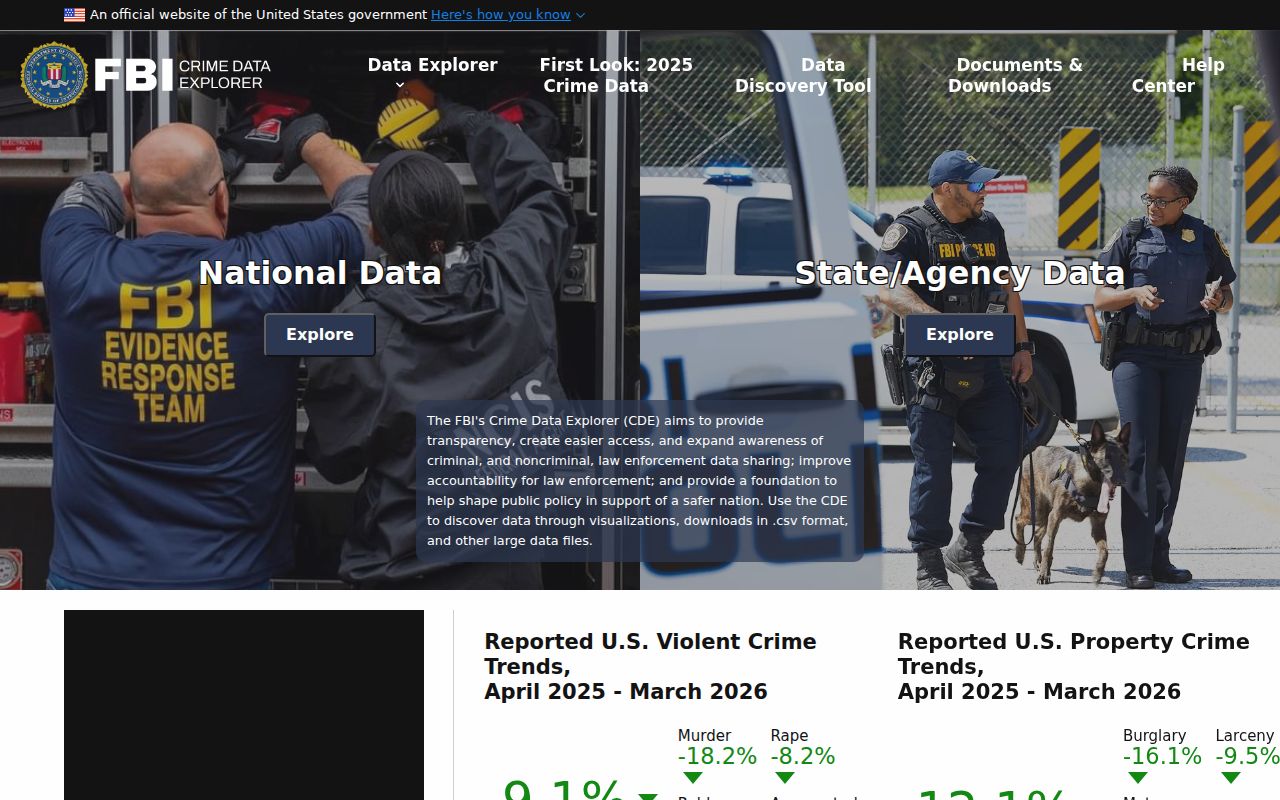
The FBI source can place Hudson police activity in context, but reported offenses and arrests are not court convictions. A local incident count measures agency reports, and a court disposition records the legal result.
Partial reporting or a different date range can distort comparisons. Preserve the agency name, year, and measure when citing any Hudson figure.
Where Hudson Records Go
The city, county, and state do not share one live file. Hudson Police keeps the incident record. The Sheriff keeps any county jail booking. The District and Circuit clerks keep their court files. Michigan State Police CJIC receives reportable fingerprints and dispositions for the state repository. A delay or identifier mismatch at one stage can create a temporary gap elsewhere.
Record flow: Hudson Police Department › 2A District Court › 39th Circuit Court after bindover › Michigan State Police Criminal Justice Information Center
For a new incident, call Hudson Police first. For filed charges, search District Court. For current custody, use the Sheriff. For the final legal result, return to the court docket or clerk. ICHAT is a later statewide cross-check. It excludes warrants, local misdemeanors, traffic, juvenile, federal, tribal, out-of-state, and suppressed matters.
Hudson Felony Records After Bindover
A felony case starts in 2A District Court even though the alleged act occurred in Hudson. Arraignment, bond, the probable-cause conference, and preliminary examination appear in that first file. If the examination is waived or probable cause is found, the case is bound over. The 39th Circuit Court then creates the felony trial file.
Hudson felony flow: Police report › District complaint › Arraignment › Probable-cause conference › Preliminary examination or waiver › Circuit information › Plea or trial › Disposition
The District and Circuit matters may use different numbers, so search both levels. A District entry that ends in bindover is not the final outcome. Read the Circuit charge dispositions, judgment, and sentence. When a public image is missing, contact the correct clerk rather than asking Hudson Police to provide a court pleading.
The full Lenawee criminal court case path explains how to follow both files and interpret the register of actions.
Hudson Arrest Missing From ICHAT
A recent Hudson arrest may not appear in ICHAT at once, and some arrests will never appear in its public product. Michigan uses fingerprint association for reportable events. A record can be absent because it was not within a reportable category, had not been processed, lacked a successful identifier match, or was suppressed. Juvenile, federal, tribal, out-of-state, traffic, warrant, and local-misdemeanor data are excluded.
Use the local chain when the state result is blank. Ask Hudson Police for its report, use the jail line for current custody, and search 2A District Court for charges. Search Circuit Court later if the felony was bound over. A $10 ICHAT search can add statewide public history, but a no-record result does not override those primary sources.
If an ICHAT entry is wrong, obtain the source court disposition. The clerk corrects its own file, and MSP can update the repository when it receives authoritative documentation.
Hudson FOIA Redactions Explained
Michigan FOIA provides access to existing city records, subject to statutory exemptions. Hudson can redact personal information whose release would be a clearly unwarranted invasion of privacy. It may also protect active-investigation material, confidential sources or techniques, juvenile content, victim identifiers, and medical information. The response should state the legal ground for denied material.
A redaction does not mean the full report is secret. Agencies generally separate exempt and nonexempt material when that can be done. A requester can narrow the date, place, report type, and desired components to reduce search time and make the request easier to process. Court records use a different access framework under MCR 8.119.
When the requested record was made by another agency, Hudson may direct the requester to that custodian. That is a routing issue, not proof that the event has no public record.
Public Access Rules in Hudson
A Hudson city request should be in writing, identify the existing record with reasonable detail, and include a delivery address. Lawful charges can include duplication, mailing, and labor for search, review, separation, redaction, or copying. An agency may ask for a good-faith deposit when an estimate is large enough under Michigan law.
For court cases, use MiCOURT or the clerk under Michigan Court Rule 8.119. Protected identifiers, sealed cases, confidential documents, and restricted juvenile material will not be public. A blank portal result cannot establish that a record never existed.
Key Statutes:
Michigan FOIA, MCL 15.231 declares the state's public-access policy for government affairs and official acts.
MCL 15.233 allows a sufficiently described request to inspect, copy, or receive a public record, subject to lawful exemptions.
Michigan Court Rule 8.119 governs inspection, access, and restrictions for court records.